Donau Silphie: sustainable farming for a green future
In the path towards a model of sustainable and environmentally friendly agriculture, La Silphium Perfoliatum L., better known as Silphie stands out as an innovative and responsible choice. This perennial crop, introduced by AgriTrade exclusively for Italy, is a perfect combination of productivity and sustainability, offering environmental, economic and social benefits.
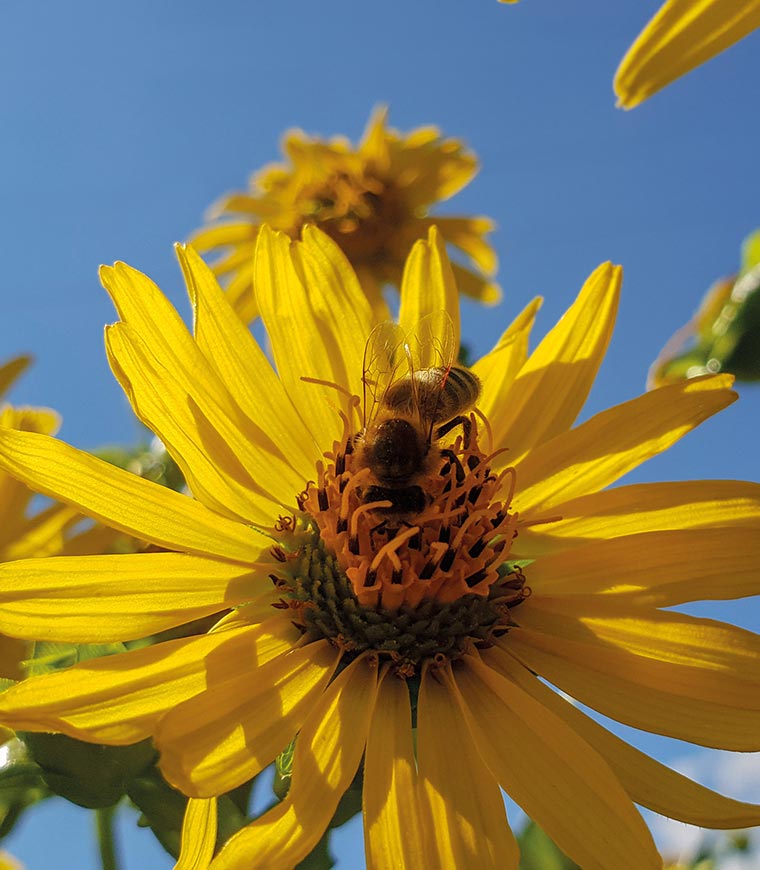
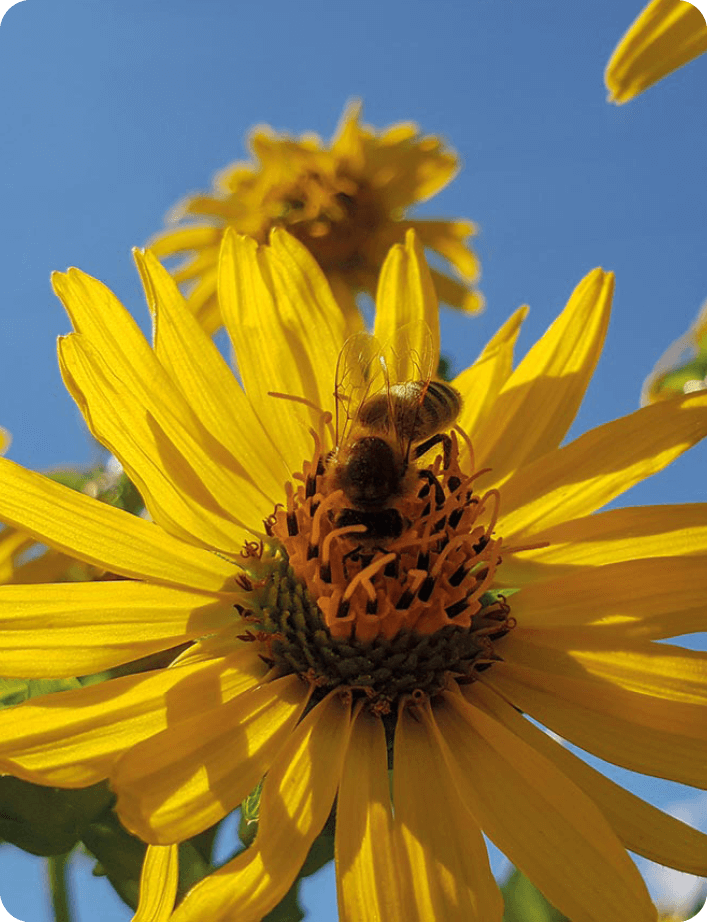
Thanks to its deep and resistant root system, Silphie adapts to a wide range of soils and does not require irrigation after the first year, thus contributing to a responsible use of water resources. n addition, its cup-shaped leaves, capable of retaining morning dew, support pollinating insects such as bees, promoting biodiversity.
Silphie: a key ally
CLIMATE CHANGE
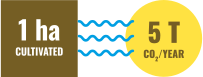
Each hectare cultivated is capable of absorbing up to 5 tons of CO2 per year, significantly reducing the carbon footprint. Its applications in the circular economy, from the production of high-performance biogas to the creation of ecological paper (“Silphie Paper”), make it a multifaceted solution for the sustainable future.
BEEKEEPING INDUSTRY
The benefits for sustainability
Reduction of CO2 Emissions
REDUCTION OF GREENHOUSE GAS EMISSIONS
Silphie emissions are between 8.5 and 10.2 gCO2eq/MJ of biomethane, much lower than crops such as silage maize (17.1 gCO2eq/MJ). This performance is due to the low consumption of resources, including fertilisers and diesel, and its multi-year nature that reduces the crop impact.
CO2 SEQUESTRATION
The cultivation of Silphie contributes to the reduction of the carbon footprint thanks to its ability to capture carbon in the soil.
BIODIVERSITY SUPPORT
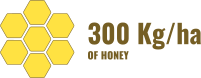
Thanks to its long flowering, it promotes the survival of pollinating insects such as bees, offering up to 300 kg/ha of honey.
Water Saving
significantly reducing the need for irrigation.
The crop requires a low input, with balanced fertilisations,
and uses digestate as a natural fertiliser.
It needs irrigation only in the first year of planting; then it relies on natural rain.
It is a multi-year crop with an average duration of 15 years,
reducing annual processing and improving soil quality.
Energy Production
Circular economy
Plant residues are used in the production of ecological paper (“Silphie Paper”),
reducing the impact of waste.
Cultivation management and care
The crop is rustic and adaptable to different soil types, requiring minimal effort after the first year. he use of organic fertilisers, such as digestate, and the reduced need for chemical treatments make Silphie a responsible and ecological choice.
Using Silphie means investing in a crop that looks to the future, integrating innovation and sustainability into agriculture. Its ability to regenerate soil, reduce environmental impact, promote biodiversity and a responsible use of natural resources, consolidating the contribution to the ecological transition and the circular economy. It makes it a fundamental piece for a sustainability balance that aims at a positive and lasting impact.
For a sustainable environment
Our commitment to a safe, innovative, environmentally sensitive and better tomorrow for everyone.
NEWS